Cradle 2 Cradle
Think of buildings as a service
Cradle 2 Cradle
Think of buildings as a service

Nachhaltigkeit
Autor(en)
Nikolai Schulte
|
Management team
Nikolai Schulte
|
Management team
Lesezeit
min.
When we talk about sustainability in construction, there is no way around the Cradle to Cradle concept. Because this principle makes a decisive contribution to making the construction industry more sustainable.

Instead of relying on linear construction processes in which materials end up in the garbage dump after their life cycle, Cradle to Cradle promotes Idea of a closed cycle. Materials are selected and used in such a way that they can be reused or recycled after a building has been demolished.
Buildings are equipped with Cradle to Cradle In other words, no longer regarded as end products, but as temporary stores of valuable raw materials. Developed by Michael Braungart and William McDonough, C2C (Cradle to Cradle) aims to close material cycles in such a way that every building material can be reused or biodegradable after use. This approach is no longer a niche concept, but a strategic lever for companies that want to combine ESG compliance, resource efficiency and long-term profitability.
.jpg)
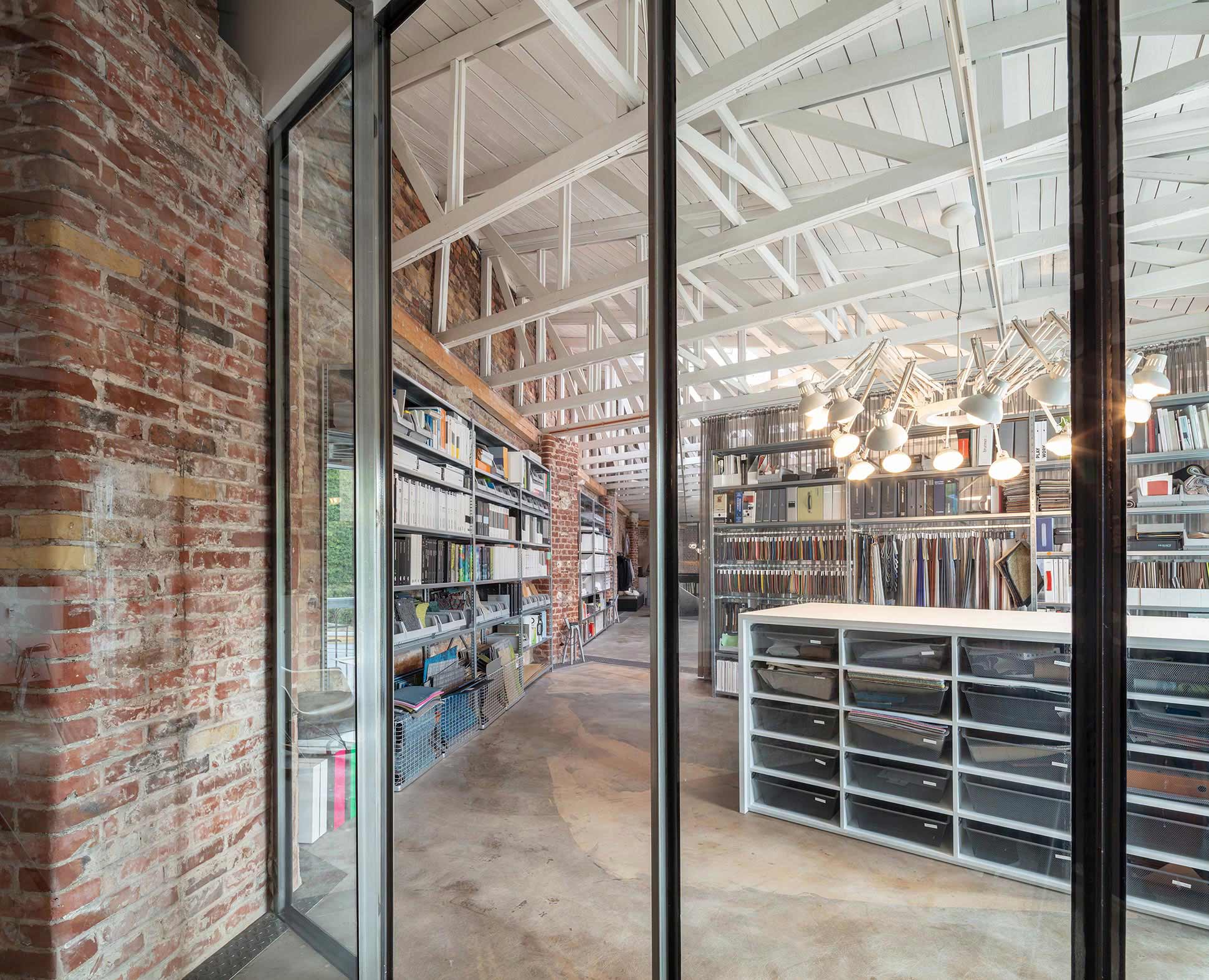
In interior design, rooms are also designed in such a way that they are not only aesthetically appealing, but also comply with Cradle to Cradle principles. Design decisions significantly influence how materials can be reused or recycled. A clever design allows components to be easily dismantled and reused instead of ending up in landfills.
While conventional construction processes are often linear — from raw material extraction to landfilling — C2C uses circular systems. The difference is in the details:
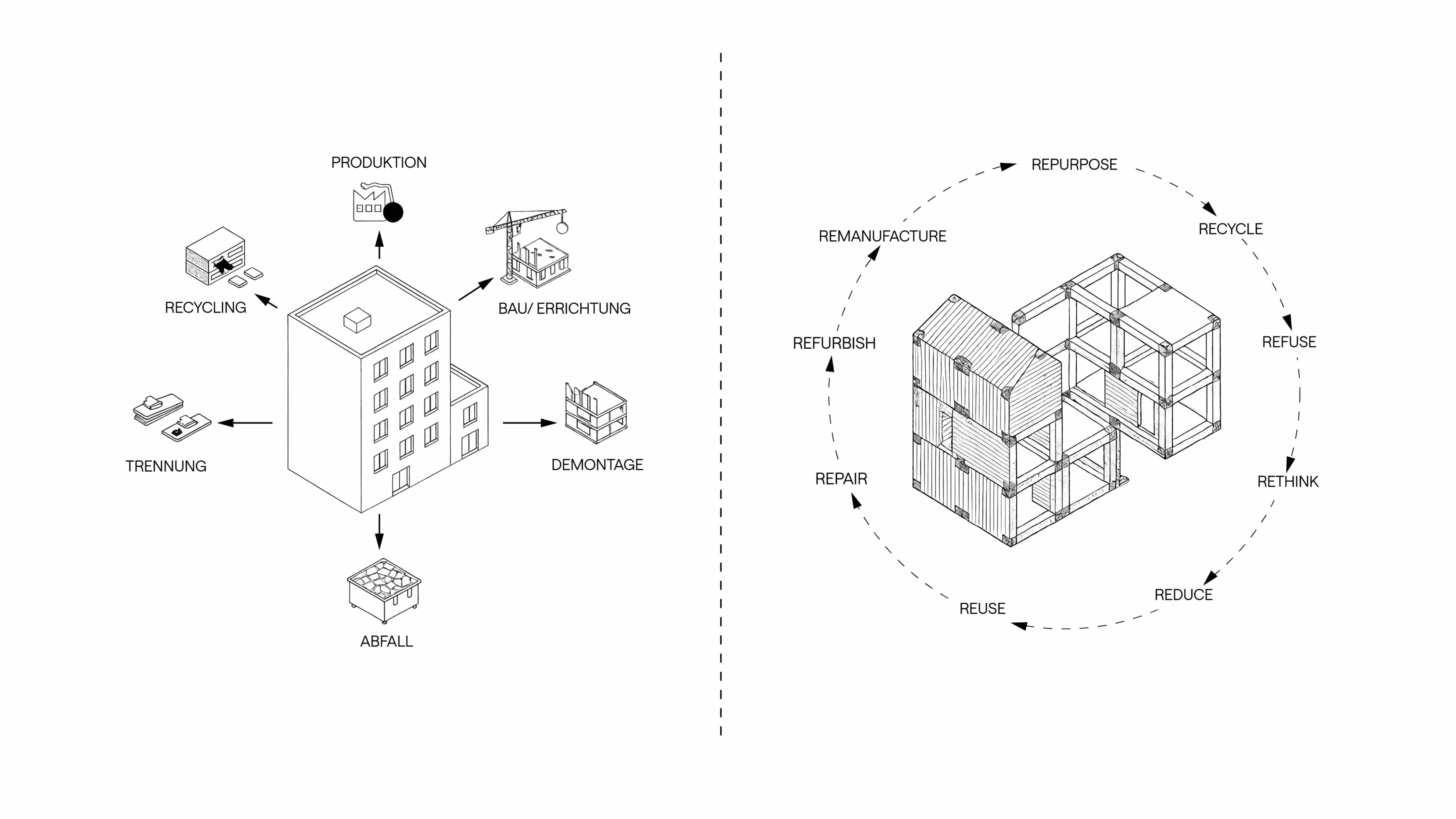
C2C is based on three core principles:
Materials remain in circulation through reuse or composting.
Buildings are designed as a service — materials remain the property of manufacturers and are taken back.
The energy used comes entirely from renewable sources.
This requires a rethink in the planning and implementation of construction projects, but at the same time offers the opportunity to establish a more sustainable and resource-efficient construction method.
.jpg)
This is a paradigm shift in the construction industry: away from linear “Take, use, throw away” mentality towards a circular approach that views buildings as material banks. This concept, a core element of circular economy, revolves around the idea that the materials used in a building do not simply disappear, but can be reused in future projects.
Resources are conserved, the amount of waste is drastically reduced and the environmental impact is reduced. In addition, health-friendly materials are often used in Cradle 2 Cradle, which actively contribute to a better indoor climate. At the same time, building owners and architects can save costs in the long term, as fewer new materials have to be purchased. Cradle to Cradle fundamentally changes the way we look at buildings: They are no longer end products, but dynamic repositories of valuable resources.
After all, it is about maximizing the lifespan of materials and keeping their use in a continuous cycle.
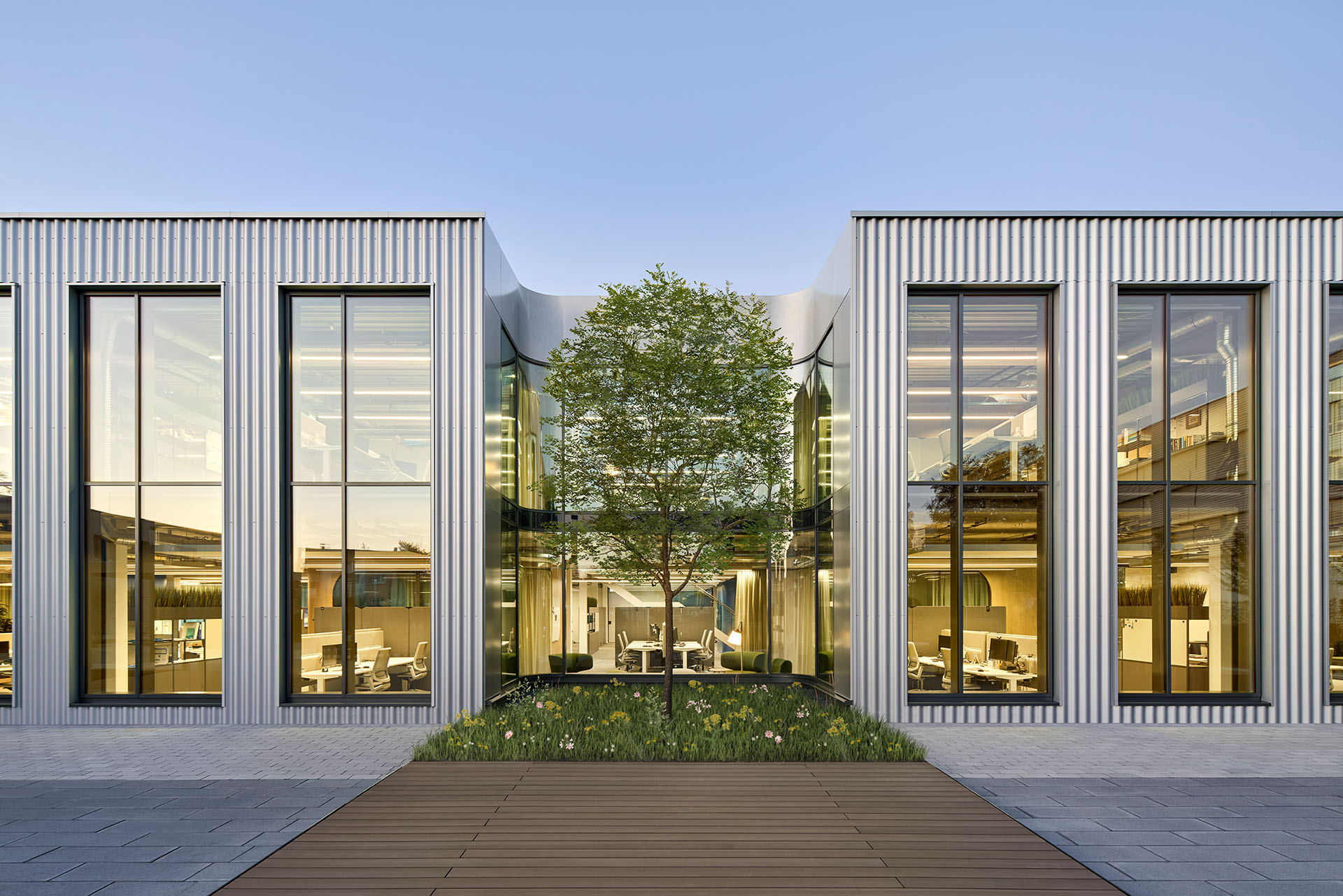
The implementation of Cradle to Cradle in construction opens up great opportunities for sustainable, value-stable buildings. With precise material planning and clearly defined cycles, components can be specifically prepared for reuse and high-quality recycling. Increasingly available standards, digital material passports and tried and tested dismantling concepts help planners and contractors to efficiently organize dismantling and recycling.
C2C also offers convincing economic prospects. Although getting started often requires investments in innovative materials, qualification and new processes, this is offset by falling life cycle costs, higher value stability and measurable sustainability benefits. More and more projects are showing that initial investments pay off over the life cycle through improved material quality, longer useful lives and valuable secondary raw materials.
For implementation to be successful, integrated strategies that combine technology and efficiency are recommended: early planning with material data and dismantling goals, partnership-based supply chains, transparent cost-benefit analyses over the life cycle, and incentive models for reuse rates. This is how Cradle to Cradle goes from an ambitious concept to tangible added value for builders, users and the environment.
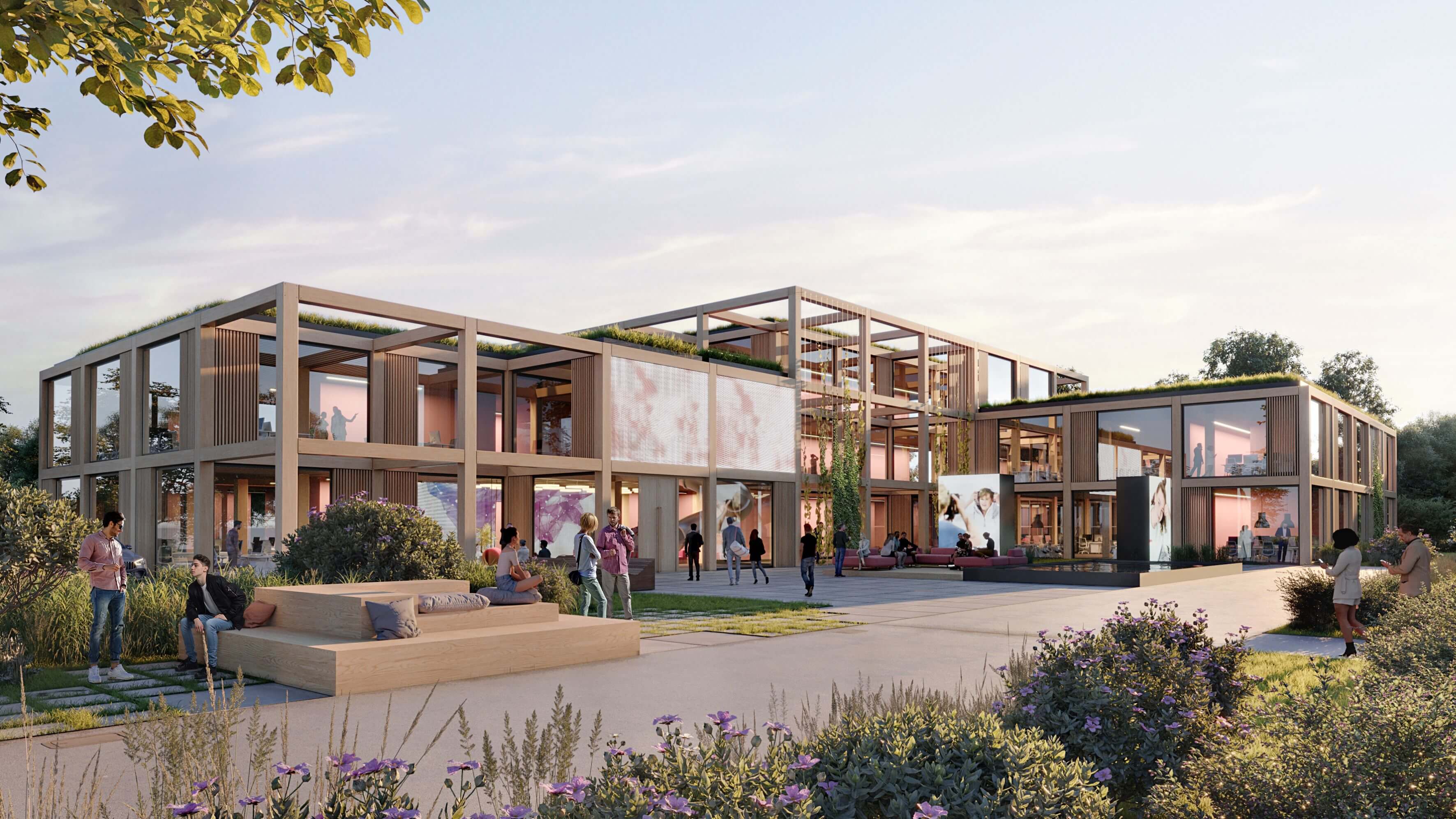
The Circular Building in London is a prototype that shows how circular construction actually works. The building was consistently designed for dismantling and reuse: mechanical rather than glued connections, single-type separability of materials and transparent material passes with QR codes enable high-quality return or direct reuse of components at the end of the use phase.
The modular, prefabricated design with dry joints and standardized interfaces is particularly convincing. This reduces construction time and waste, makes subsequent adjustments easier and creates the basis for reusable components — from recycled steel in the structure to dismantled façade and interior components.
The prototype also sends important signals economically: Life cycle costs are improved by maintaining the value of the components, lower disposal costs and take-back models. Digital material passports and a BIM-supported material register increase transparency and planning security for all parties involved.
As a prototype, the Circular Building makes it tangible how Cradle to Cradle principles create added value — through flexibility, resource efficiency and value retention. It provides practical blueprints that can be transferred to real construction projects.

The construction industry is facing a rethink: Cradle to Cradle offers a way to operationally implement ESG goals, minimize regulatory risks and increase real estate values at the same time. The success factor is the early involvement of all stakeholders — from construction management to employee representation — in order to synergistically combine technical, legal and social aspects. Companies that now invest in C2C expertise are not only positioning themselves as pioneers of sustainability, but are also securing long-term competitive advantages in a market that is increasingly demanding recyclability.
Wissen
|
Nachhaltigkeit