Feasibility study for financial institutions
From inventory to strategy.
Feasibility study for financial institutions
From inventory to strategy.


banking planning
Autor(en)
Heiner Kolde
|
CEO & Founder
Heiner Kolde
|
CEO & Founder
Lesezeit
min.
For banking board members, a feasibility study is not a technical side process, but a central control tool for the future branch and real estate strategy. It combines structural, organizational and cultural issues to form a reliable basis for decision-making — from the head office to the customer hall as the institute's calling card.

Financial institutions are under high transformation pressure: changing customer behavior, hybrid working models, increasing ESG requirements and the question of the role of the branch of tomorrow. A feasibility study not only answers what is technically feasible, but also which option is strategically reasonable, economically viable and culturally compatible.
It creates transparency between minimally invasive renovation, core renovation and new construction and makes it visible which solution your organization will support in the long term — in figures, areas and effects on employees and customers.
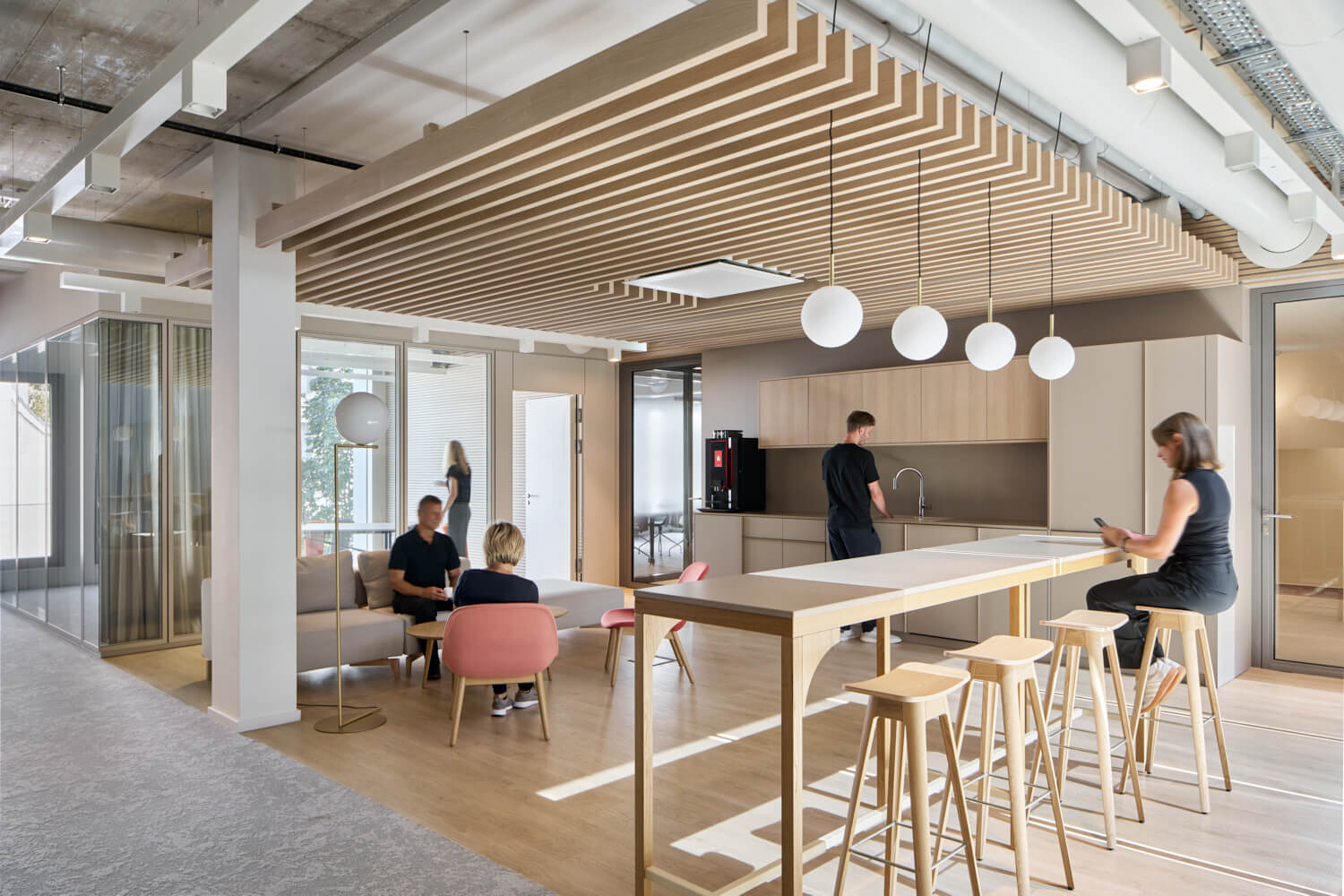
The first step is a precise analysis of the existing building. Area structures, development, structural structures, technical building equipment, energy status and regulatory framework conditions are systematically assessed. This makes it possible to see what potential lies in the existing building, where technical or fire protection limits exist and where conversion variants can be implemented in an economically viable way.
On this basis, restrictions can be differentiated from opportunities: What can be adapted with reasonable effort, what would only be possible with disproportionate intervention, and where does the inventory reach its structural limits. The inventory analysis forms the basis of every feasibility study for banks: It separates potential from restrictions and creates the basis for reliable variant decisions.
.jpg)
It is not enough for financial institutions to think of areas in square meters only. The decisive factor is whether the building structure supports future working methods, hybrid teams and agile forms of organization. New Work is understood as an attitude: Communication, focus and collaboration are represented equally spatially.
This makes it clear whether a building only fits today or is still sustainable in ten years. Sustainability here means designing spaces in such a way that they grow with the organization without having to rethink every step of the way.

The core of the feasibility study is a strategy workshop with the Executive Board, divisional managers and selected stakeholders. Here, strategic goals, current pain points and priorities are systematically collected — from space efficiency and ESG requirements to employer branding and the role of the branch in the omnichannel.
At the same time, expectations for buildings, technology and working methods are compared and condensed into a common goal: How should the head office work in the future, how closely the customer hall and working environments are interlinked, how much presence does leadership need, how much flexibility does the team need. This target image later serves as a common thread for all variants. It prevents decisions from only being made from a construction or cost perspective and ensures that real estate strategy, corporate culture and business model fit together. The strategy workshop ensures that the feasibility study is not only technically effective, but also culturally and strategically — a decisive success factor for banks and savings banks.
Based on the inventory analysis and the target image, at least three scenarios will be developed: minimally invasive renovation, core renovation and new construction. Each variant is assessed according to defined criteria — such as investment volume, life cycle costs, implementation time, ESG compliance, flexibility, re-use potential and impact on employees and customers.
An evaluation matrix with a traffic light system makes this complexity understandable to the Management Board at a glance: Green signals high goal achievement, yellow indicates limited suitability, red indicates significant conflicting goals. This creates a transparent basis for decision-making that puts personal preferences into perspective and makes discussions more objective. Board committees receive a clear recommendation including risks and levers, instead of just a collection of floor plans.
Reliable figures are crucial for investment decisions in banking. The feasibility study therefore combines area, variant and technology decisions with cost and investment analyses. Investment costs, follow-up costs, savings potential through space reduction or energy efficiency, and the economic effect of standardized branch modules are considered.
Certification aspects (e.g. DGNB, BREEAM, ESG criteria) are also integrated at an early stage in order not to “dock” measures retrospectively, but to weave them into planning right from the start. This makes it clear which investment has which effect on operating costs, sustainability goals and reputation in the market — an important factor, especially for institutions with a strong regional mandate.

A professional feasibility study for financial institutions does not provide floor plans, but investment security: with reliable cost, life cycle cost and ESG analyses right from the start.
The strategy workshop is followed by an automated survey format that involves employees and managers in a structured way. Work methods, attendance rates, team collaboration, communication requirements and room preferences are queried.
The results are incorporated into a reliable calculation of space requirements and prevent planning from being based only on gut feeling or outdated occupancy figures.
The result is a data image that shows how much space is actually required, which room types are relevant and how desk sharing, project spaces or retreat spaces can be combined sensibly.
The particular added value is created when architecture, interior design with a focus on new work and coaching work closely together. Buildings, spatial concepts and change processes are therefore not thought of separately, but as a coherent transformation project.
This enables solutions that combine technical, economic and cultural dimensions: spaces that make the institute's DNA visible, involve employees in change and create customer experiences that strengthen trust.
Accompanying coaching and academy formats support managers and teams in the concrete implementation — from new use of space to a changed understanding of roles in consulting and service.
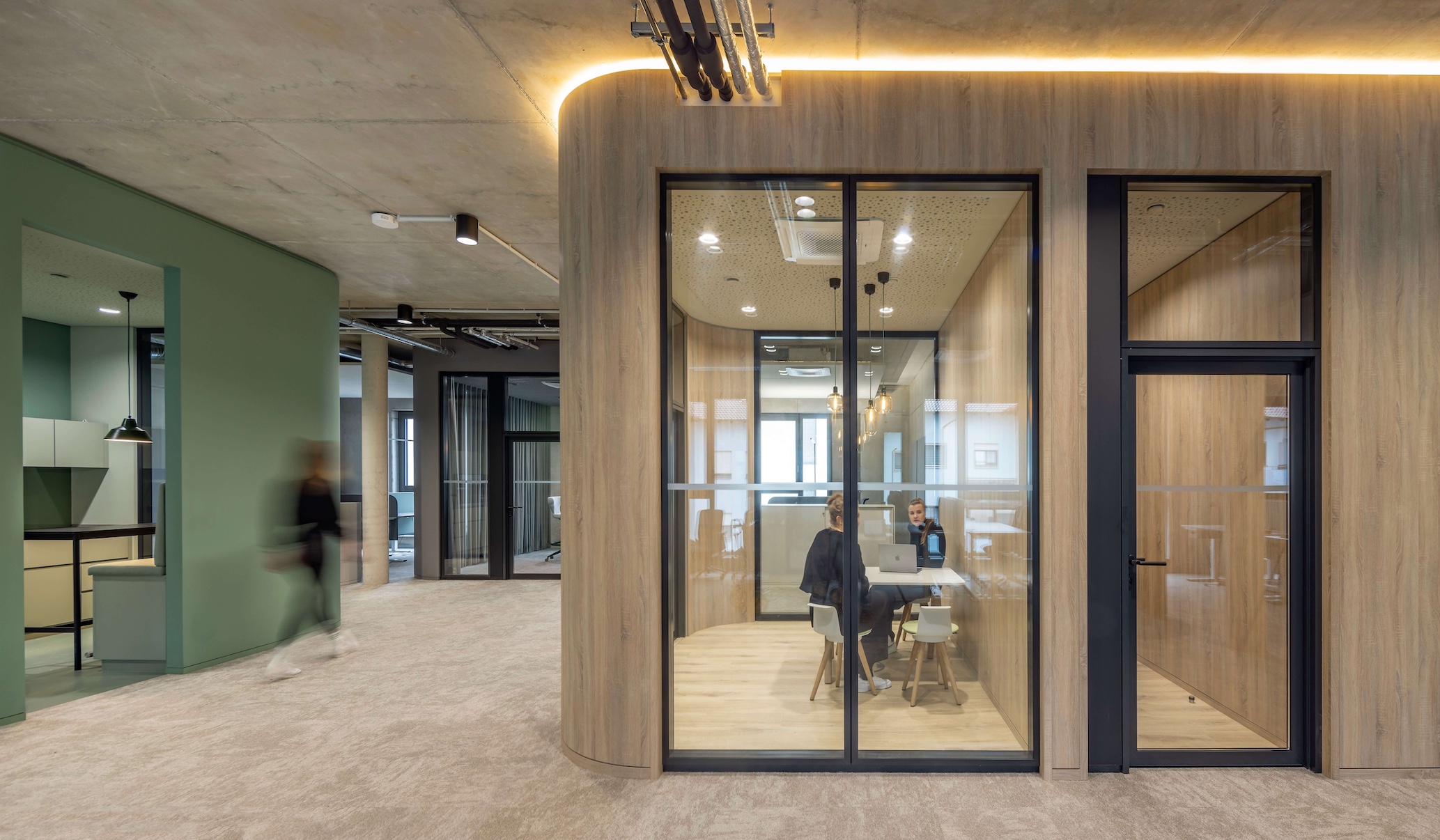
For financial institutions, a specific feasibility study is recommended, which specifically addresses industry-specific requirements such as security, confidentiality, regulation, cash logistics and brand identity.
At the same time, a combined study can be useful if head offices, traditional office spaces and, if applicable, service or learning spaces in the same real estate portfolio are to be considered.
In this way, synergies in the use of space can be exploited and a consistent design system can be developed that is recognizable from the head office to the small branch.
In the context of financial institutions, the customer hall plays a special role: It is a brand space, service platform and social meeting place at the same time. In the feasibility study, it is therefore considered holistically — spatially, functionally and atmospherically.
Customer routes, consultation zones, digital touchpoints, discreet retreat options and event potential are analysed in order to define the hall as a sustainable experience space.
This is about more than furnishing: The customer hall is seen as the linchpin of omnichannel banking, which combines physical presence with digital services. For banks and savings banks, the customer hall is more than just a reception area — it is a brand room, service platform and omnichannel interface in one.
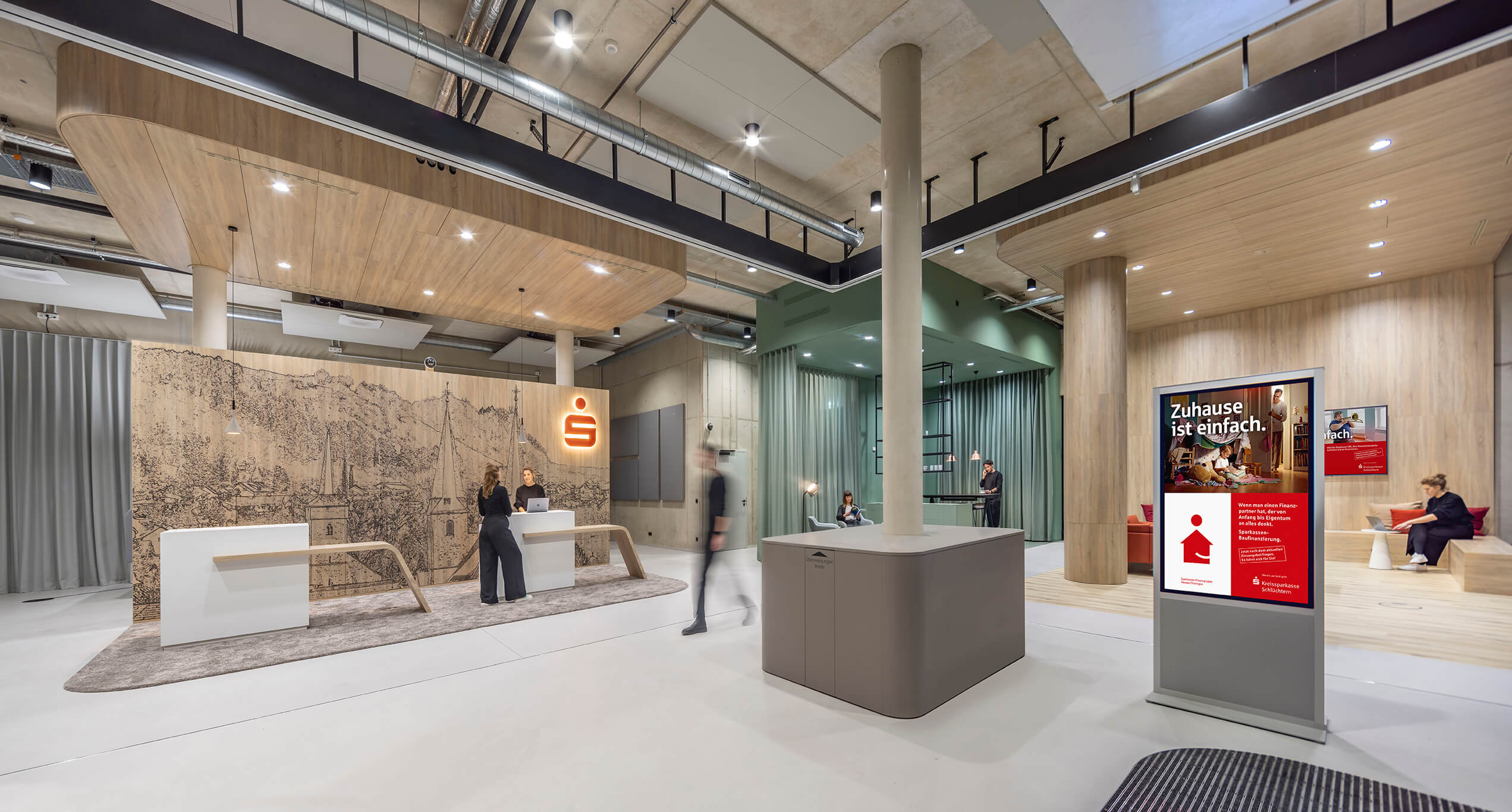
The feasibility study places a strong focus on customer experience: How will money transactions be organized in the future, how will the reception go, what does consulting feel like — from classic appointment advice to spontaneous formats.
Flexibility and modularity are becoming the economic key. Standardised modules for service, advice, waiting areas or self-service zones make it possible to develop branches of various sizes cost-effectively from the same modular system.
In this way, branch concepts can be adapted depending on location, frequency and strategic importance without having to replan each time. This reduces investment costs and accelerates rollouts.
Another aspect is the multi-functionality of the customer hall. As part of the feasibility study, it is being examined how the space can be used outside normal opening hours — for example as a venue, meeting place for associations or a stage for regional partners.
This strengthens the institute's local roots and makes more intensive use of existing land, which has a positive effect on profitability and perception as part of the region. At the same time, new contact points are being created between banks, customers and the community, which usefully complement digital offerings.
Generation Z's expectations of banking and branch experience differ significantly from previous customer groups: Authenticity, digital identity, transparent processes and spaces with a quality of stay are becoming increasingly important.
The feasibility study should therefore examine how the planned spaces address these expectations — from informal meeting places to co-working-like zones to integrated digital services.
Topics such as culture, experience, regionality and employee identification can, depending on their depth, be outsourced into downstream concepts and communication strategies. However, they remain relevant as a guardrail to prevent spaces from being planned only functionally but not to create an identity.
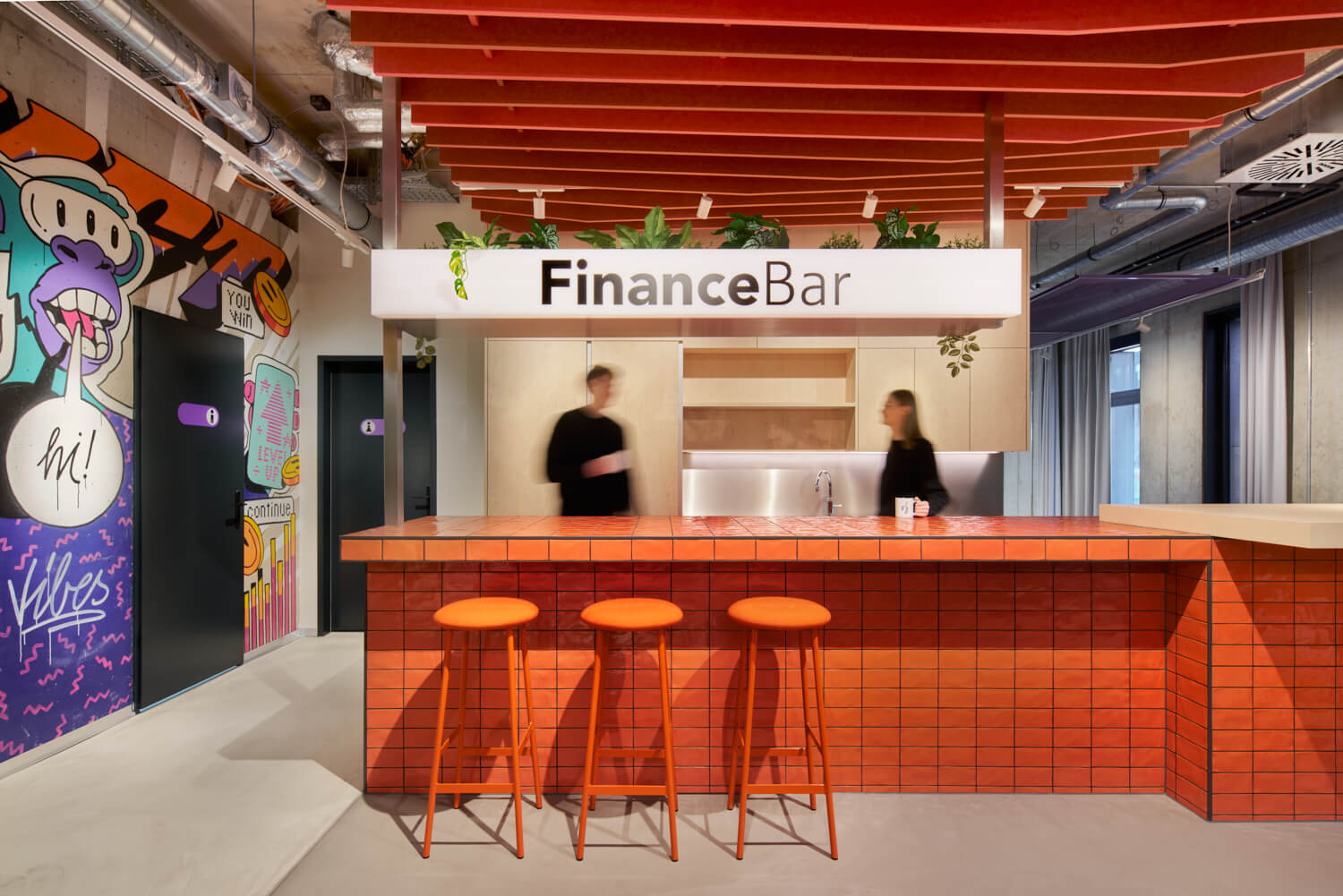
For board members of financial institutions, a professionally prepared feasibility study provides three key added values: it reduces investment risks, it increases the sustainability of the real estate strategy and it strengthens the organization's cultural and brand effectiveness. Buildings are thus transformed from a cost block into a strategic tool.
The methodological structure is decisive: from inventory and technology analysis to strategy and participation formats to variant comparison, cost and certification analysis and a clear, understandable decision picture.
A feasibility study for banks and savings banks is most effective when it sees technical analysis, strategic objectives and cultural change as a joint project and thus turns a real estate decision into a lasting competitive advantage.
Wissen
|
banking planning


.webp)

